Running a food business in 2025 is genuinely more complicated than it was five years ago. Between Natasha's Law, increased FSA scrutiny, and the ever-present risk of a food safety incident going viral on social media, the stakes have never been higher for cafes, restaurants, caterers, hotels and food manufacturers across Yorkshire.
Here's what you need to have in order — and where businesses most commonly fall short.
1. Natasha's Law — Are You Still Fully Compliant?
Natasha's Law has been in force since October 2021, requiring that all pre-packed for direct sale (PPDS) foods — things like sandwiches, wraps and salads made on site and then packaged — must carry full ingredients labelling, including allergen information with the 14 major allergens highlighted.
Three years on, many smaller food businesses are still getting this wrong. If your café or deli prepacks items on site and sells them, this applies to you. The consequences of a mislabelled product can be fatal — and the reputational damage from a food safety enforcement action can close a business.
2. Allergen Awareness for All Food Handlers
Every person who handles food — from the kitchen porter to the head chef — should understand the 14 major allergens, how cross-contamination occurs, and how to respond when a customer declares an allergy. This isn't just good practice; it's a legal expectation under food hygiene regulations.
Our Allergen Awareness training and Level 2 Food Safety in Catering courses cover exactly this, and they're available at our Boroughbridge centre or onsite at your premises.
3. Food Safety Management Systems (HACCP)
If you run a food business, you are legally required to have a documented food safety management system based on HACCP principles (Hazard Analysis and Critical Control Points). When the FSA visits, this is one of the first things they'll ask to see.
Many smaller businesses either don't have this in place, or have a system that was set up years ago and hasn't been reviewed. Your HACCP documentation should reflect your current menu, your current premises, and your current team.
4. Food Hygiene Ratings — What They Actually Mean for Your Business
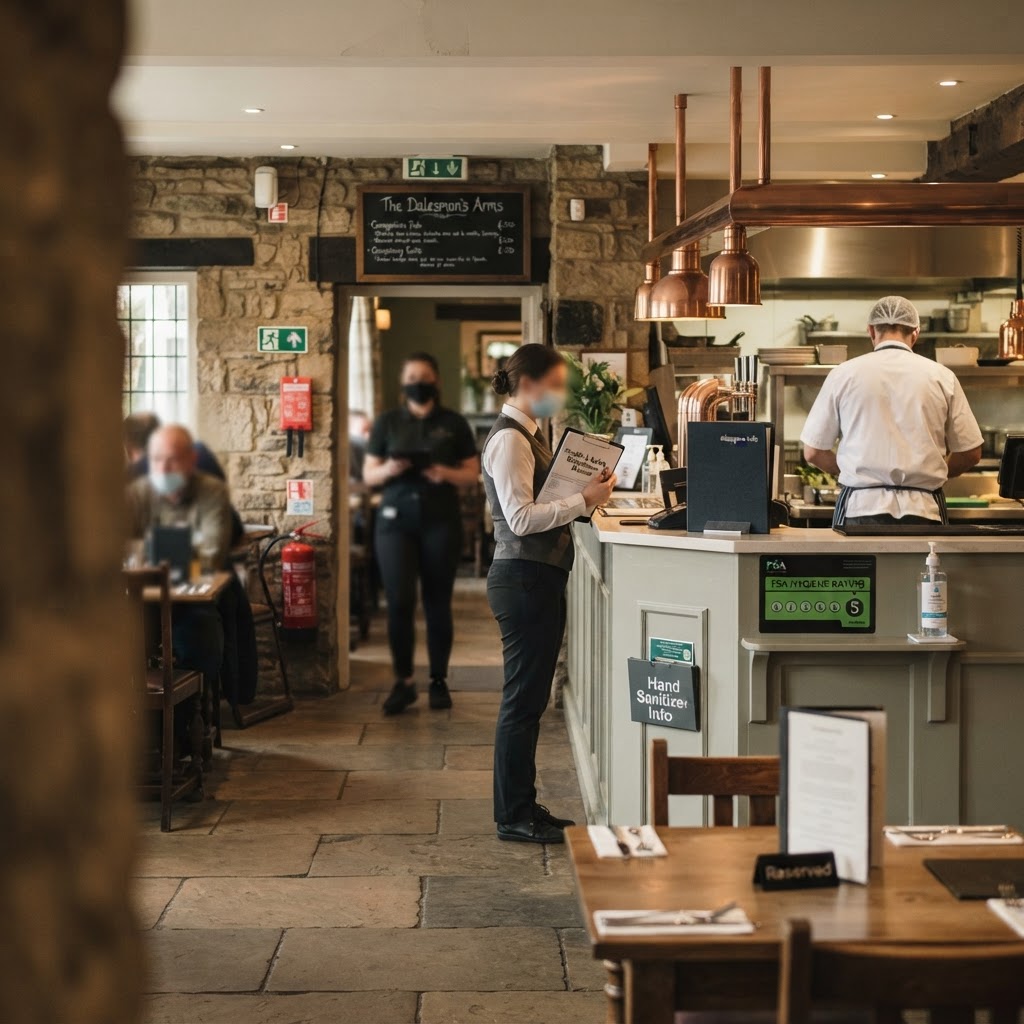
In Wales, displaying your food hygiene rating is mandatory. In England it's still voluntary — but the FSA publishes all ratings online, and customers increasingly check before they visit. A rating of 2 or below can have a measurable impact on trade.
The best way to improve your rating is straightforward: trained staff, clean premises, documented procedures. All of which we can help you with.
5. Don't Forget Temperature Control
Temperature abuse remains one of the leading causes of food safety failures in inspections. Refrigeration running too warm, hot food not being held at the right temperature, inadequate cooling procedures — these are consistently flagged by environmental health officers. Make sure your team knows the legal temperature requirements and has a consistent recording system in place.
How Livius Training Can Help
We deliver food safety training for hospitality businesses, catering operations, care homes, schools and manufacturers across Yorkshire. Whether you need a one-day Level 2 for your front-of-house team or a Level 3 for your kitchen supervisor, we've got you covered — in the classroom, on-site, or online.
We also deliver Allergen Awareness training as a standalone course — ideal for hospitality businesses that want to make sure every member of the team, including casual and seasonal staff, is up to speed.
📞 Give us a call or book online — we'd love to help you stay compliant and keep your customers safe.