The Hidden Cost of Poor Technique
In the modern workplace, we often focus on complex technological hazards, yet the most common source of injury remains deceptively simple: moving objects. Whether in a warehouse, a hospital, or an office, manual handling is a part of daily life. However, when done incorrectly, it leads to musculoskeletal disorders (MSDs) that can sideline employees for weeks or even months. Statistics show that over 400,000 workers in the UK alone suffer from work-related musculoskeletal disorders each year, accounting for millions of lost working days. By mastering the fundamentals of lifting, pulling, and carrying, you aren't just following regulations—you are investing in the long-term health and productivity of your workforce.
The Principles of Safe Lifting
The secret to safe handling lies in the TILE acronym: Task, Individual, Load, and Environment. Before you even touch an object, you must perform a dynamic risk assessment using this framework:
- Task: Does the job involve twisting, stooping, or reaching? Minimize these movements by keeping the load close to your body.
- Individual: Consider the person’s physical capabilities. Does the task require specific training or a two-person lift?
- Load: Is the object heavy, bulky, or unstable? If it is over 20kg, you should always look for mechanical assistance.
- Environment: Are there trip hazards, poor lighting, or uneven surfaces? A clear path is the first step to safety.
Practical Techniques for Every Day
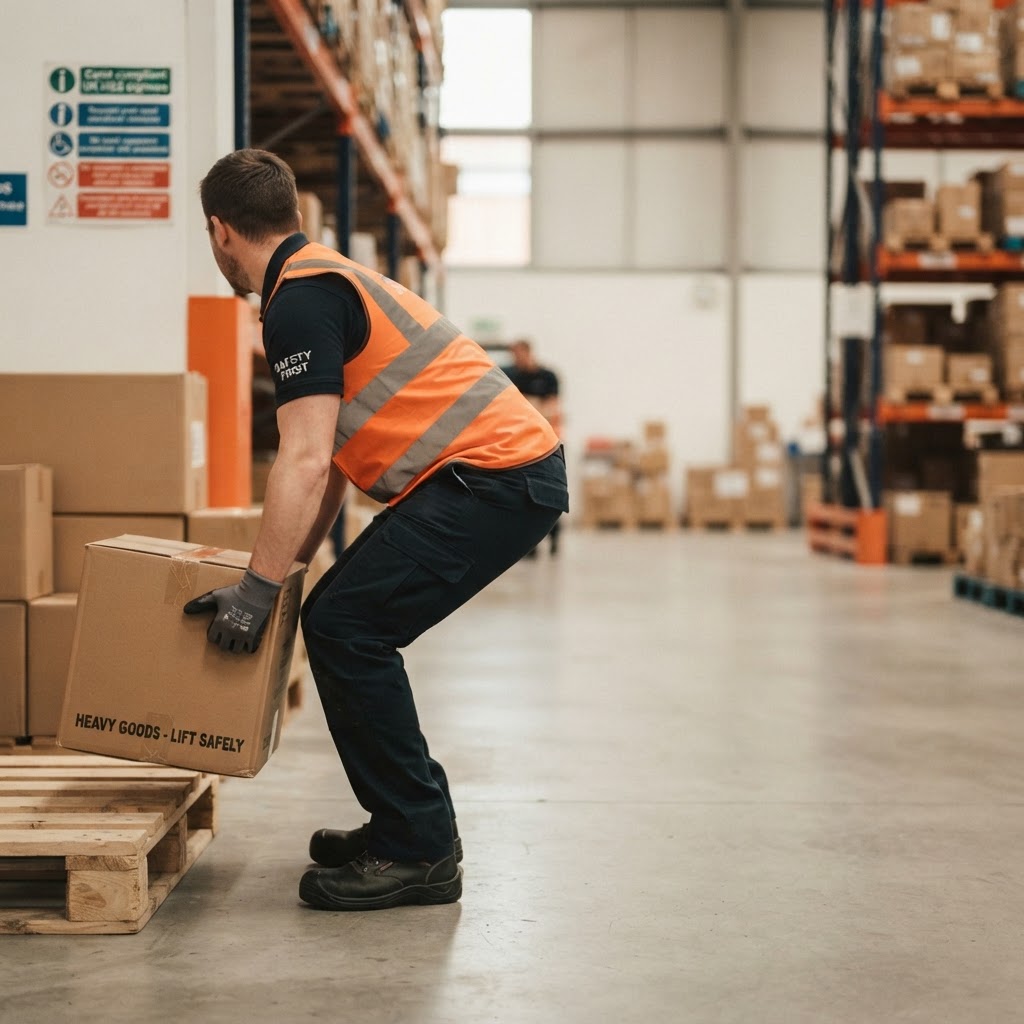
Proper posture is your best defense against injury. When lifting, always remember the 'Power Zone'—keeping the weight between your mid-thigh and mid-chest. Start by standing close to the load with feet shoulder-width apart. Bend at the knees, not the waist, and maintain a straight back to keep your spine neutral. When moving the load, move your feet rather than twisting your torso, as the spine is highly vulnerable to rotational stress under pressure. Real-world accidents often occur when workers try to multitask or 'save time' by cutting corners. Encourage your team to pause, breathe, and reset their posture before every lift.
The Role of Mechanical Assistance
The safest lift is the one you don't have to perform manually. Modern workplaces should prioritize engineering controls over human effort. Utilize sack trucks, conveyor belts, trolleys, or vacuum lifters whenever possible. If an object is too heavy for one person, don't rely on 'team lifting' unless you have clear communication and coordination protocols in place. True safety culture acknowledges that manual labor should be minimized where innovation can take the strain.
Take Action Toward a Safer Workplace
Knowledge is only the first step. Translating theory into muscle memory requires expert-led, hands-on training. At our training consultancy, we provide comprehensive, site-specific manual handling courses designed to empower your team with the skills they need to stay safe. Don't wait for an injury to happen before you act. Contact our team today to schedule your assessment or book a group training session, and ensure your business remains a safe, healthy environment for everyone.