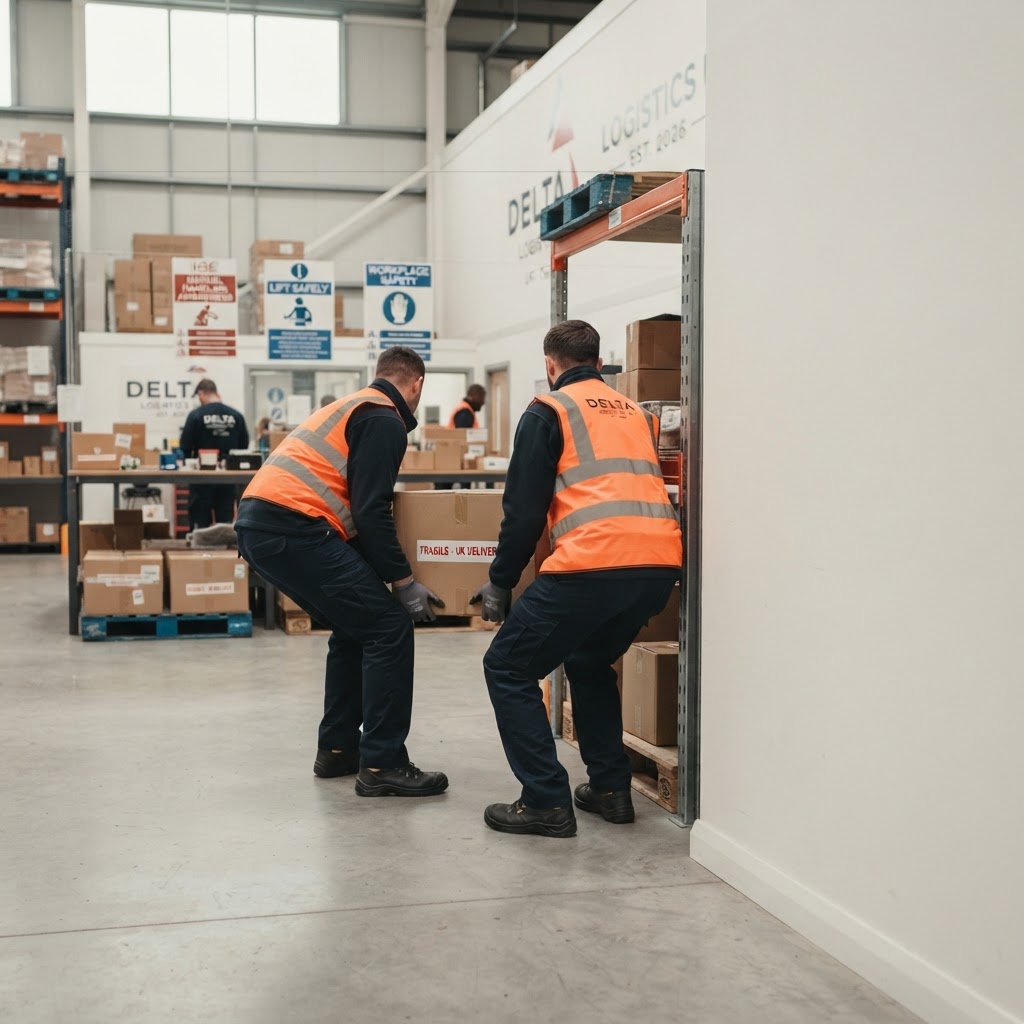
Manual Handling in 2026: The Real Cost of Workplace Injuries and How to Protect Your Team
At Livius Training Centre, we’ve been delivering accredited safety training from our base in Boroughbridge since 2009. In those seventeen years, we’ve seen health and safety trends come and go, but one issue remains stubbornly at the top of the list for UK employers: manual handling injuries.
As we move through March 2026, the latest Health and Safety Executive (HSE) figures for the 2024/25 period have highlighted a sobering reality. Despite advancements in warehouse automation and assistive technology, musculoskeletal disorders (MSDs) still account for roughly 27% of all work-related ill health in the UK. For employers across Yorkshire and the North East, this isn't just a statistics exercise—it’s a matter of operational continuity, staff morale, and significant financial cost.
The Current Landscape: What the Data Tells Us
The most recent HSE data confirms that manual handling—specifically lifting, carrying, and repetitive movements—remains the primary cause of MSDs. In the last reporting year, over 470,000 workers were suffering from new or long-standing work-related musculoskeletal disorders. This resulted in an estimated 6.6 million working days lost annually.
When our team visits sites in Leeds, Harrogate, or Bradford, we often find that employers underestimate the cumulative effect of minor injuries. It isn’t always the one-off heavy lift that causes a claim; often, it’s the repetitive, "low-risk" tasks that haven't been properly assessed. As the HSE often notes in their guidance, the cost to the employer isn't just the sick pay—it’s the lost productivity, the cost of temporary cover, and the potential for increased insurance premiums.
"Manual handling is not just about heavy lifting. It is about any activity that requires a person to use force to pull, push, lift, carry, or move a load. The risk is often hidden in the tasks we consider 'normal'."
Legal Responsibilities under the 1992 Regulations
The Manual Handling Operations Regulations 1992 (as amended) still provide the legal framework we must follow. As an employer, you have a clear hierarchy of duties:
- Avoid: Can you eliminate the need for manual handling altogether? (e.g., using a conveyor or pallet truck).
- Assess: If you can’t avoid it, you must carry out a thorough risk assessment.
- Reduce: Implement measures to reduce the risk of injury to the lowest level reasonably practicable.
In our experience, the "Assess" stage is where many businesses falter. A generic risk assessment tucked away in a dusty folder isn't enough. It needs to reflect the actual environment your team is working in today.
The TILE Approach: A Practical Refresher
When we conduct training sessions across Wakefield and the wider North East, we always return to the TILE acronym. It is the simplest, most effective way for your staff to assess a lift before they even touch the load:
- Task: Does it involve twisting, stooping, or reaching upwards? Is there enough rest or recovery time?
- Individual: Does the worker have a pre-existing injury? Does the task require unusual strength? Are they wearing the correct PPE?
- Load: Is it heavy, bulky, difficult to grasp, or unstable? Does it have sharp edges?
- Environment: Are the floors slippery or uneven? Is the lighting poor? Is it too hot or too cold, affecting grip and fatigue?
Prevention Strategies That Actually Work
It’s one thing to know the rules; it’s another to implement a culture of safety. Here is what we recommend to the businesses we partner with:
1. Invest in Mechanical Aids: Even small investments like height-adjustable trolleys or vacuum lifters pay for themselves by reducing the physical strain on your workforce. We always tell our clients: if a machine can do the heavy work, let it.
2. Empower Staff to Speak Up: A culture where a warehouse operative feels comfortable saying, "This load feels unstable," is a culture that avoids accidents. Safety shouldn't be top-down; it should be collaborative.
3. Practical, Not Just Theoretical, Training: E-learning has its place (and we offer excellent e-learning modules), but for manual handling, nothing beats hands-on practice. Seeing a team member demonstrate the correct 'power position' and foot placement in person ensures the message sticks.
How Livius Training Can Help
We don’t believe in "tick-box" exercises. Our manual handling courses are designed to be engaging and directly relevant to your specific workplace. Whether you are a manufacturing hub in Bradford, a logistics firm in Leeds, or a small business in North Yorkshire, we tailor our approach to your industry.
Our instructors are experts in their fields, bringing years of practical experience to every session. We ensure your team understands not just how to lift safely, but why it matters for their long-term health and your business's success.
Is your manual handling training up to date? Don't wait for an accident to happen before you review your procedures.
Contact our friendly team at Livius Training Centre today. Based in Boroughbridge, we are perfectly positioned to serve businesses throughout Yorkshire, Harrogate, Wakefield, and the North East.
Call us on 01423 322006 or visit our course booking page to secure your next training date. Let’s work together to keep your team safe, healthy, and productive.