The Invisible Safety Net
Imagine a typical Tuesday morning in the office. Someone trips while carrying a hot beverage, or perhaps a colleague suddenly experiences a medical emergency during a high-stakes presentation. In those critical first few minutes before professional paramedics arrive, the outcome is often determined not by luck, but by the preparedness of those standing nearby. First aid training is the invisible safety net that keeps your organization resilient.
The Business Case for Preparedness
While many companies view first aid training purely as a compliance requirement, it is actually a powerful investment in human capital. According to the Occupational Safety and Health Administration (OSHA), thousands of workplace injuries occur annually, many of which can be mitigated with immediate, effective intervention. When employees are trained, they aren't just following rules; they are cultivating a culture of care. This fosters a sense of psychological safety, where team members feel supported knowing their peers possess the skills to act in a crisis.
1. Recognizing the Golden Hour
Medical professionals often speak of the 'Golden Hour'—the critical period immediately following a traumatic injury or sudden illness during which prompt medical treatment has the highest likelihood of preventing death or long-term disability. Practical training empowers staff to recognize signs of cardiac arrest, severe allergic reactions, or uncontrolled bleeding. Knowing how to deploy an Automated External Defibrillator (AED) can increase the survival rate of cardiac arrest victims by as much as 70% if used within the first few minutes.
2. Mastering the Fundamentals
Modern first aid is about more than just applying bandages. Quality training programs focus on:
- Assessment: Learning to scan for environmental hazards to ensure the rescuer does not become a second casualty.
- Communication: How to effectively relay information to emergency dispatchers while maintaining composure.
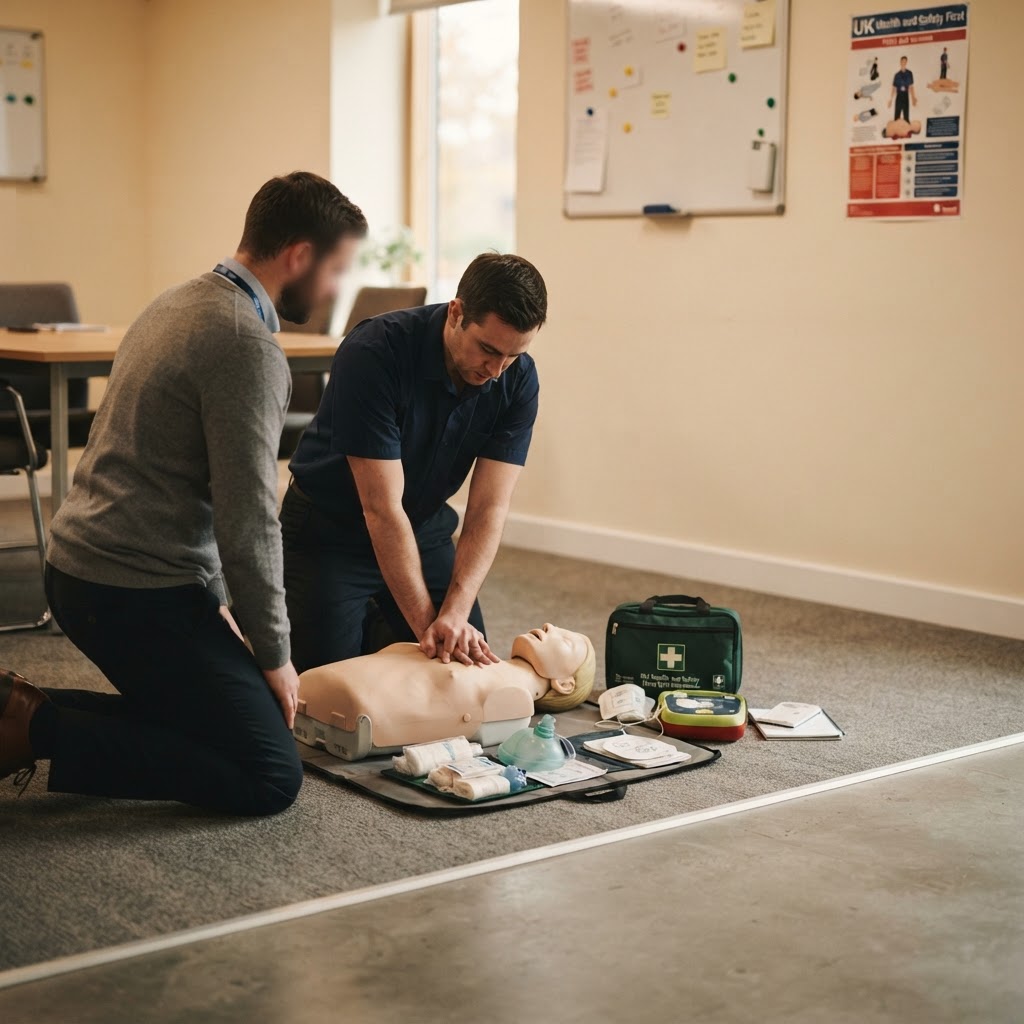
- Technical Intervention: Mastering CPR cycles, the Heimlich maneuver, and modern tourniquet application techniques for severe lacerations.
3. Bridging the Gap Between Fear and Action
The biggest barrier in a medical emergency is often the 'bystander effect'—the hesitation to act out of fear of making the situation worse. Professional training replaces panic with a systematic checklist. By practicing these scenarios in a controlled environment, employees build the muscle memory required to bypass the freeze response. Real-world simulations, such as practicing a mock evacuation or a localized medical emergency, ensure that the skills taught in the classroom hold up under the pressure of a real-world event.
Building a Culture of Readiness
Training should never be a one-time event. Skills fade, and protocols evolve. We recommend bi-annual refresher courses to keep your team sharp and confident. When you prioritize continuous learning, you transform your workplace from a space where accidents are feared to a space where they are managed with competence and grace.
Take the First Step Today
Safety is not an accident; it is the result of intention and preparation. Don't wait for an emergency to realize the value of professional first aid skills. Empower your team, protect your people, and ensure your organization is ready to handle whatever the day brings. Contact our training experts today to schedule a comprehensive first aid workshop tailored to your industry’s unique needs. Your preparation today could be the difference between a minor incident and a life-altering event.