Why First Aid Matters in Junior Rugby
Rugby is a sport built on respect, teamwork, and physical courage. But with that physicality comes the reality of injury — and when you're dealing with children and young people, the stakes are even higher.
Whether it's a scraped knee at training or something more serious on match day, having the right first aid cover in place isn't just a box-ticking exercise. It's about making sure every child gets home safe.
At Livius Training, we work with three rugby clubs across Yorkshire — including their junior teams — to make sure their first aid provision is up to standard, their volunteers are trained, and their coaches know exactly what to do when the unexpected happens.
In this guide, we'll walk you through the common injuries in junior rugby, what the RFU requires, and how your club can stay compliant and confident.
Common Injuries in Junior Rugby
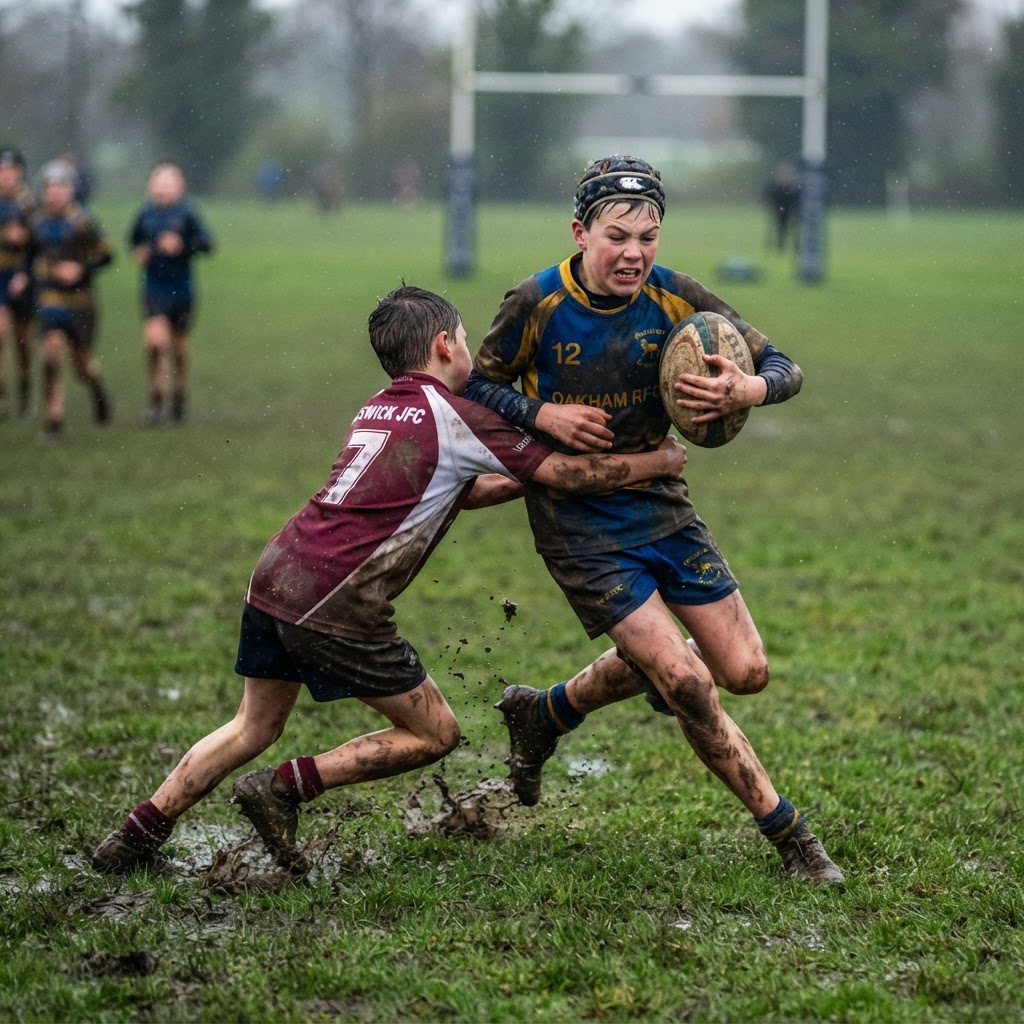
Rugby is a contact sport, and injuries are part of the game. But understanding the most common ones helps clubs prepare the right first aid response:
- Cuts and grazes: The most frequent injury, usually from tackles or falls on hard ground. Most are minor but need proper cleaning and dressing to prevent infection.
- Sprains and strains: Ankles, knees, and shoulders take the brunt of tackles and sudden changes of direction. The RICE protocol (Rest, Ice, Compression, Elevation) is essential knowledge for any pitch-side first aider.
- Fractures and dislocations: Less common in junior rugby but can occur, particularly in the collarbone, fingers, and shoulders. These require immobilisation and immediate medical attention.
- Concussion: The most critical injury to manage correctly. Rugby has specific protocols for concussion, and getting it wrong can have serious long-term consequences — especially for children and young people whose brains are still developing.
The good news? Most rugby injuries are minor and fully recoverable with the right immediate care. That's why having a trained first aider pitch-side makes such a difference.
 What the RFU Requires: Pitch Side First Aid & Immediate Care
The Rugby Football Union (RFU) is the governing body for rugby in England, and their Pitch Side First Aid & Immediate Care guidance is the definitive reference for clubs.
The RFU states that every rugby club should complete an annual first aid risk assessment and ensure appropriate first aid cover and equipment are in place for the rugby activities being run.
Importantly, the RFU's regulations do not require every member of staff or volunteer to hold a first aid qualification. What they require is that the club has completed a risk assessment and has an appropriate level of first aid cover based on the risks of the activity.
The Junior Rugby First Aid Checklist
For junior rugby teams, the requirements are a bit stricter because you're dealing with children. Here's what every club should have in place:
Must Have
- ✅ A trained first aider available at matches and training sessions
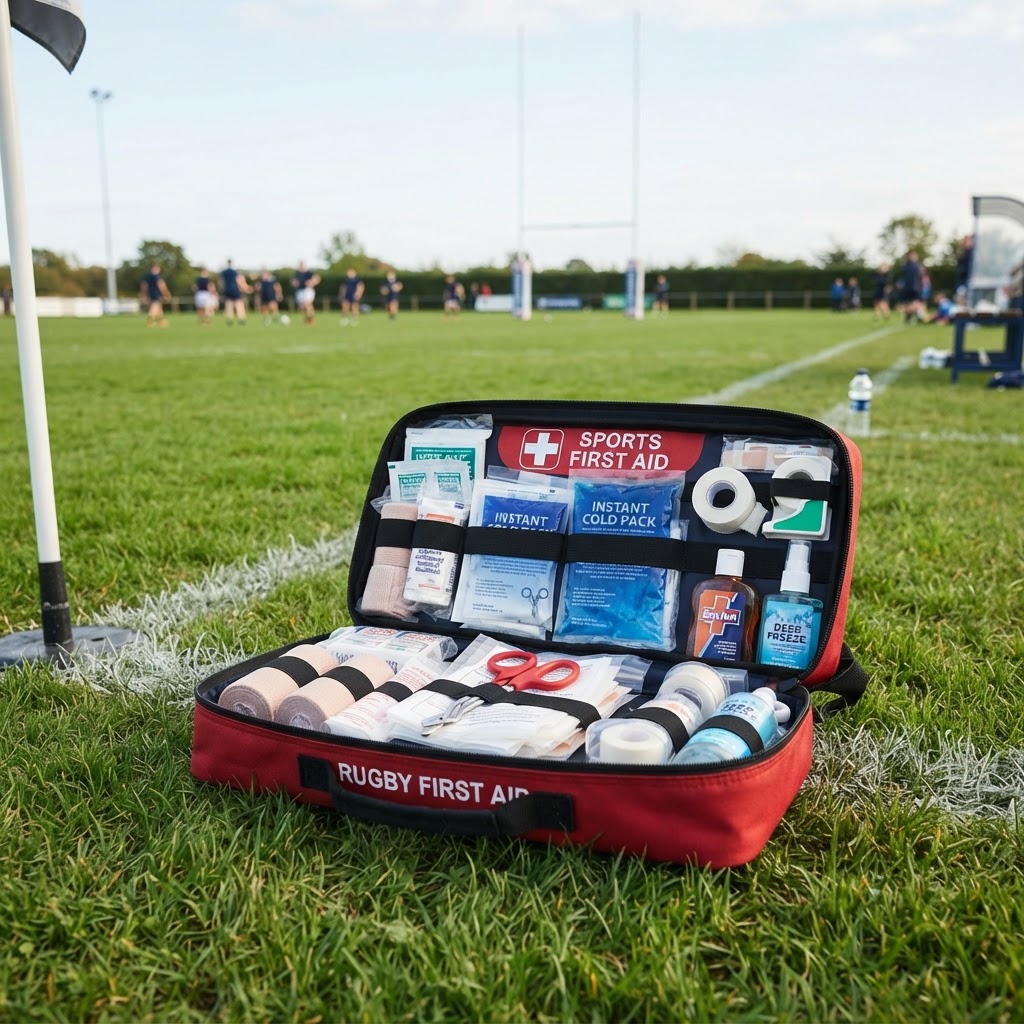
- ✅ A stocked first aid kit available pitch-side
- ✅ Access to a phone to call emergency services
- ✅ Clear access for an ambulance to reach the pitch
- ✅ An emergency action plan so coaches and volunteers know what to do if a player is seriously injured
- ✅ Concussion awareness for coaches, first aiders, and volunteers — the RFU recommends completion of the HEADCASE concussion awareness training
Strongly Recommended
- ✅ An AED (defibrillator) on-site or nearby
- ✅ Coaches with rugby-specific first aid training
- ✅ Ice packs, gloves, and emergency contact details for all players
Concussion: The Biggest Risk in Rugby
If there's one area where first aid training makes the biggest difference in junior rugby, it's concussion.
Rugby has a higher rate of concussion than almost any other sport, and the RFU takes it extremely seriously. Their HEADCASE programme is designed to raise awareness of concussion across the game — from coaches and parents to players themselves.
Key things every junior club should know about concussion:
- Recognise the signs: Headache, dizziness, confusion, nausea, memory problems, balance issues, or "just not feeling right" after a head impact.
- Remove the player: If in doubt, sit them out. A player with suspected concussion must be removed from play immediately — no exceptions.
- Graduated return to play: A concussed player should not return to play on the same day and must follow a graduated return-to-play protocol under medical supervision.
- It's different for children: Children and adolescents take longer to recover from concussion than adults, and the risks of returning too soon are greater.
The RFU strongly encourages all coaches, first aiders, and relevant volunteers to complete the free HEADCASE online e-learning module. It takes about 30 minutes and could make all the difference.
Defibrillators (AEDs): Why Every Club Should Have Access
Sudden cardiac arrest is rare in young people, but when it happens, a defibrillator can be the difference between life and death. For every minute without defibrillation, the chance of survival drops by around 10%.
The RFU recommends that clubs have access to an AED — either on-site or at a nearby location. Many community clubs in England now have a defibrillator installed, often funded through community fundraising or grants from organisations like the British Heart Foundation.
If your club has an AED, make sure:
- It's regularly maintained and the pads are in date
- Volunteers know where it is and how to use it
- It's accessible during all matches and training sessions
- Its location is registered with local ambulance services
Free Training Resources for Rugby Clubs
There are some excellent free resources available to help clubs improve their first aid provision:
- RFU HEADCASE: Free online concussion awareness module for coaches, parents, and volunteers.
- World Rugby First Aid in Rugby: Free online module designed for coaches, parents, volunteers, and club officials.
- RFU Pitch Side First Aid & Immediate Care: The full guidance document covering first aid cover, qualifications, risk assessments, and equipment.
These are great starting points, but they don't replace hands-on, practical first aid training from a qualified provider — which is where Livius Training comes in.
How Livius Training Supports Local Rugby Clubs
At Livius Training, we're passionate about making sport safer for young people. That's why we work with three rugby clubs across Yorkshire — including their junior teams — to support their first aid needs.
Here's what we provide to our partner clubs:
- First aid training for coaches and volunteers: Our Emergency First Aid at Work (EFAW) and Paediatric First Aid courses give pitch-side volunteers the skills and confidence to handle everything from minor injuries to serious incidents.
- Annual first aid risk assessments: We help clubs complete their RFU-mandated risk assessment, identifying gaps in cover and equipment and providing practical recommendations.
- Concussion awareness sessions: We deliver tailored concussion workshops for coaches, parents, and volunteers, complementing the RFU's HEADCASE programme with hands-on, practical guidance.
- First aid kit reviews: We review clubs' pitch-side kits to make sure they're properly stocked and appropriate for junior rugby.
- Ongoing support: Our partner clubs can call on us whenever they need advice, refresher training, or help with an incident review.
We don't just turn up, deliver a course, and leave. We build ongoing relationships with our clubs so that first aid provision is always improving — and so that every coach and volunteer feels confident in their ability to keep young players safe.
Our Practical Recommendation for Junior Clubs
If you're running a junior rugby club, here's what we'd recommend as a minimum standard for first aid cover:
- Head Coach: First aid trained ✅
- Assistant Coach: First aid trained ✅
- Team Manager: Knows the emergency action plan ✅
- All coaches and volunteers: Concussion awareness training (HEADCASE) ✅
- AED/Defibrillator: Access identified and location known ✅
That way, you're well covered even if one person is absent on match day.
Need Help with Your Club's First Aid Provision?
If your rugby club needs first aid training, a risk assessment, or help getting your pitch-side provision up to RFU standard, we'd love to help.
Livius Training delivers RFU-aligned first aid courses across Yorkshire and the wider region, with experienced instructors who understand the specific needs of rugby clubs and junior teams.
Get in touch today to find out how we can support your club — or browse our first aid courses to see what's available.
Because in rugby, as in life, being prepared isn't just about compliance. It's about care.