Every year in the UK, around 30,000 out-of-hospital cardiac arrests occur. Survival rates plummet by 10% for every minute without CPR. Yet fewer than 1 in 10 victims receive bystander CPR before emergency services arrive. The reason? Most people simply don't know how.
What Is CPR?
Cardiopulmonary Resuscitation (CPR) is an emergency procedure combining chest compressions and rescue breaths to maintain blood flow and oxygenation when someone's heart has stopped. It doesn't restart the heart — it buys critical time until a defibrillator or paramedics are available.
Why Workplace CPR Training Matters
The workplace is one of the most common settings for cardiac events, particularly in physically demanding industries. With HSE regulations requiring businesses to have adequate first aid provision, CPR training isn't just a moral obligation — it's a legal one.
- Trained staff can respond within seconds, dramatically improving survival odds.
- Confidence built through practice means bystanders actually act rather than freeze.
- AED (Automated External Defibrillator) training alongside CPR increases effectiveness significantly.
What Does CPR Training Cover?
A quality workplace CPR course will cover:
- Recognising cardiac arrest vs. other medical emergencies
- Calling 999 and directing bystanders effectively
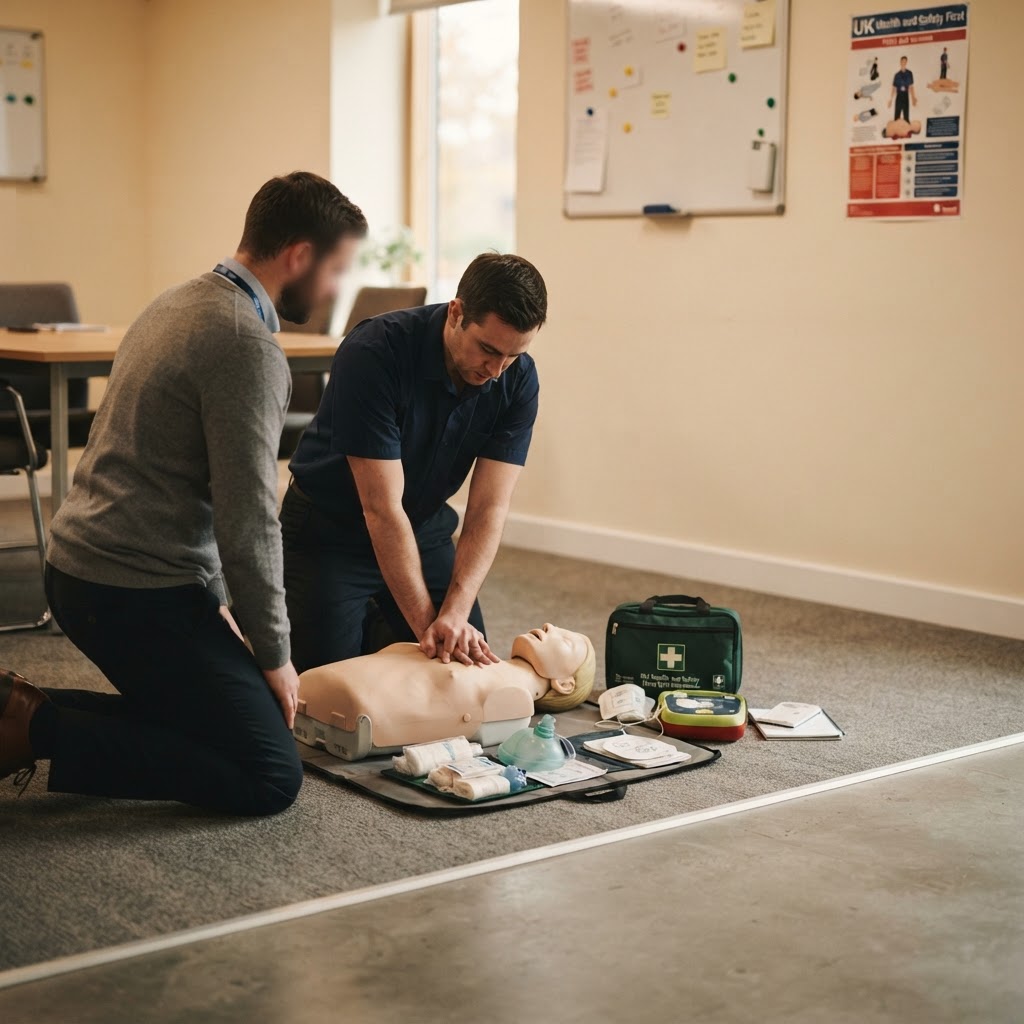
- Correct hand placement, compression depth (5–6cm) and rate (100–120 per minute)
- Rescue breaths and when to omit them (compression-only CPR)
- Using an AED safely
- Recovery position for unconscious but breathing casualties
How Often Should Staff Be Retrained?
Skills fade. Research shows CPR technique degrades significantly within 3–6 months without refresher practice. Most accrediting bodies recommend annual refresher training to maintain competency and confidence.
Real-World Impact
A logistics company in Leeds equipped all warehouse staff with CPR and AED training in 2023. Within six months, a forklift driver suffered a cardiac arrest on the shop floor. Two trained colleagues initiated CPR immediately and used the site AED — the driver survived and returned to work. Without that training, the outcome would almost certainly have been different.
Get Your Team Trained Today
Livius Training offers HSE-compliant CPR and First Aid courses for workplaces of all sizes, from half-day Emergency First Aid at Work (EFAW) to full 3-day First Aid at Work (FAW) qualifications. Contact us to discuss the right course for your team.