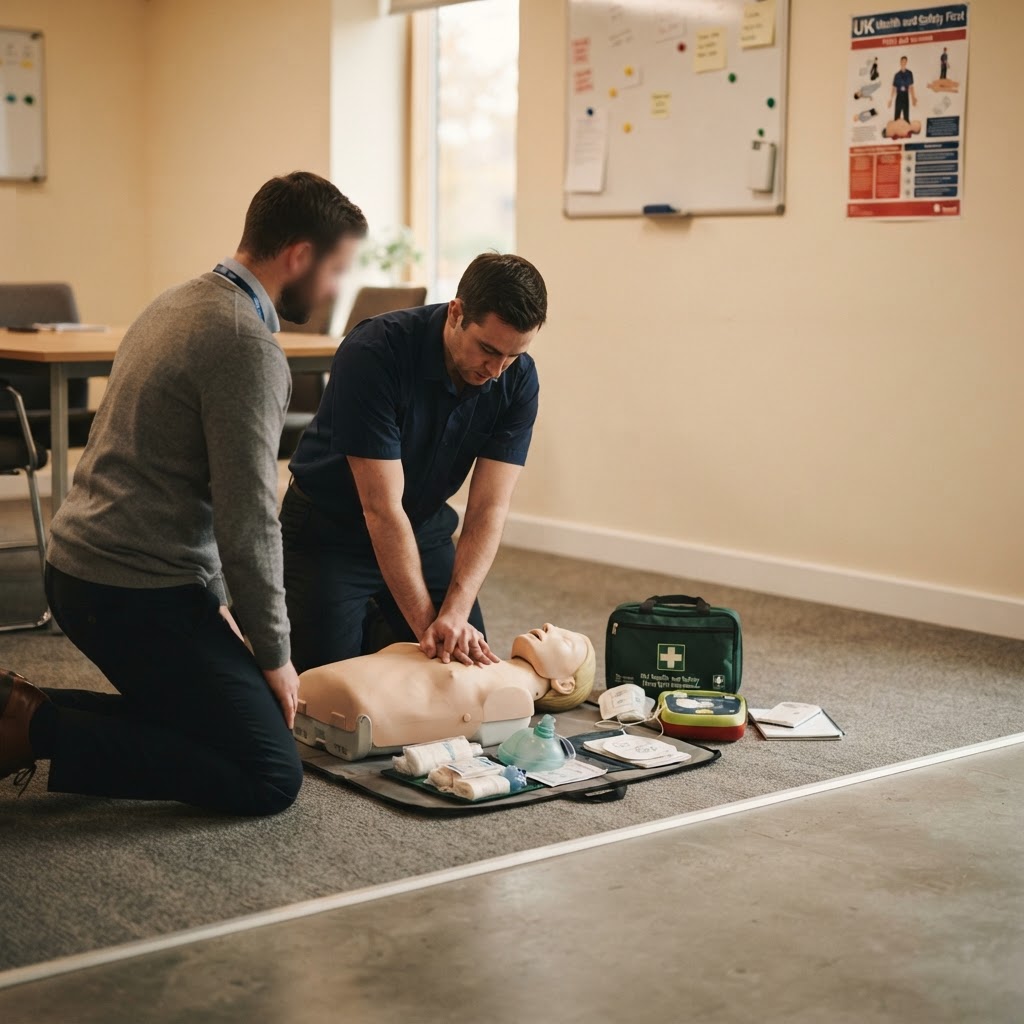
1. CPR and Using an AED
One of the most important skills anyone can learn is Cardiopulmonary Resuscitation (CPR). When someone experiences cardiac arrest, every second counts. Effective CPR—combined with the use of an Automated External Defibrillator (AED)—can keep a person alive until professional medical help arrives.
Why it matters:
- CPR can double or even triple survival rates when performed correctly.
- AEDs are simple, voice‑guided devices designed for anyone to use, not just medical professionals.
Workplace tip: Know where your nearest AED is located and ensure staff receive refreshers at least annually.
2. How to Handle Choking Emergencies
Choking can happen anywhere—from lunch breaks to informal team celebrations. Recognising the signs and responding quickly with back blows or abdominal thrusts (often called the Heimlich manoeuvre) can save a life.
Look for:
- Difficulty speaking or breathing
- Grasping the throat (universal sign of choking)
- Wheezing or high‑pitched sounds
Training staff on choking response is quick and incredibly valuable.
3. Treating Burns
Burns are common in workplaces with kitchens, machinery, or chemicals—but they can also happen in a simple office environment.
Basic burn care:
- Cool the burn under running water for at least 20 minutes
- Cover with a sterile, non‑fluffy dressing
- Never apply creams, oils, or ice
- Seek medical help if the burn is large, deep, or on the face, hands, or joints
Having the correct burn dressings available can prevent infections and reduce scarring.
4. Managing Cuts and Bleeding
Even minor cuts can become problematic without proper care. Employees should know how to apply pressure to stop bleeding and when to escalate the situation.
Key steps:
- Apply firm pressure with a clean dressing
- Elevate the injured area if possible
- Keep the person calm and supported
- If bleeding is severe, don’t remove the original dressing—add more on top and call emergency services
Understanding the basics of bleeding control helps prevent shock and further injury.
5. Recognising Signs of Shock
Shock isn’t just emotional distress—it’s a medical emergency where the body isn’t getting enough blood flow.
Warning signs include:
- Pale, cold, or clammy skin
- Weak or rapid pulse
- Confusion or dizziness
- Shallow breathing
Lay the person down, elevate their legs (unless there’s a suspected injury), and keep them warm while waiting for medical assistance.
6. Understanding Workplace-Specific Risks
A good first aid program isn’t one‑size‑fits‑all. Different workplaces have different hazards, and your first aid training should reflect that.
For example:
- Offices may focus on slips, trips, choking, and sudden illness.
- Warehouses may train for crush injuries, heavy lifting incidents, and bleeding.
- Hospitality settings often deal with burns, cuts, and allergic reactions.
Conducting regular risk assessments and updating training accordingly keeps everyone safer.
7. Knowing When (and How) to Call for Help
Sometimes the most important first aid skill is recognising when something is beyond your ability to fix.
Make sure employees know:
- The local emergency number
- How to clearly communicate the situation
- Your workplace’s address or access instructions
- Who is responsible for guiding emergency responders to the scene
Calm, confident communication can speed up critical care.
Building a Safety‑First Culture
Effective first aid training isn’t just about ticking compliance boxes. When employees feel confident responding to emergencies, it builds trust, reduces panic, and supports a safer workplace culture.
Practical next steps:
- Provide regular first aid courses
- Keep first aid kits fully stocked and easy to find
- Run emergency drills
- Encourage open discussion about safety concerns
Prepared teams are powerful teams.